
French Coaching for Adults
“Thomas is an exceptional French language teacher who possesses a unique blend of expertise, friendliness and positivity. His well-structured lessons, combined with his ability to explain complex concepts in a clear and concise manner, greatly accelerated my language learning journey.”

This coaching is for you if you want to:
- start learning French, or rebuild solid foundations
- speak French with more confidence, fluency, and precision
- prepare for a relocation, a career move, citizenship, or a long-held personal goal
One-to-one online French coaching for adults and professionals, at every level — from beginner to advanced. Lessons are personalised, structured, and adapted to your goals, your rhythm, and the realities of your professional or personal life.
A free introductory session is available below. Rates are shared transparently in the FAQ, so the session can focus entirely on your goals and how the coaching works.
- Certified teacher • Years of experience
- Business French & exam prep. (DELF/DALF, TEF/TCF)
- Real progress and confident communication
Meet your coach
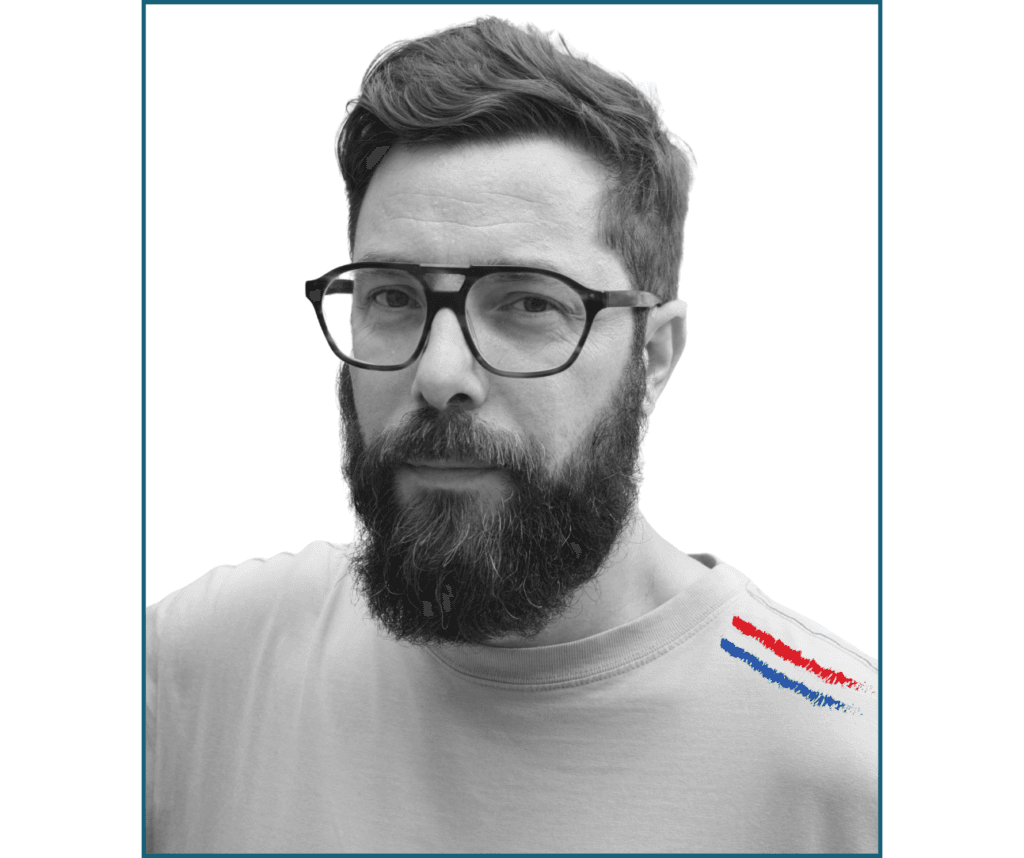
I’m Thomas, a certified language teacher with over fifteen years of experience in education.
My career began teaching English in French high schools, before I relocated to Australia, where I taught French in secondary education and went on to lead an international programme. Over the years, I have coached adult learners across a wide range of professional contexts — law, healthcare, executive leadership, banking, diplomacy, and the cultural and events industries, including film and live productions in francophone settings.
I have also lived the experience from the inside. I have moved countries, learned languages, and adapted to new professional cultures. I speak fluent English and Spanish, and I tend to pick up new languages quickly. I have raised multilingual children, which has given me a first-hand understanding of how languages take root in real life — through everyday use, not through exercises. This shapes how I coach. I understand what it actually takes to use a foreign language in real life — not only at a dinner table, but in a meeting, at an embassy desk, at a school gate, or in front of an immigration officer.
My approach combines solid pedagogical training with this real-world perspective. I understand how languages are structured, how they are acquired over time, and how they are used under pressure. I am not a school teacher delivering lessons. I am a coach, focused on what you actually need to do with the language.
I am equally at home with complete beginners and advanced learners. Working with someone who is starting from zero is, in many ways, the most rewarding part of the work — and one of the parts I take most seriously. The same patience, clarity, and respect apply at every level.
I work best with adults and professionals who value thoughtful guidance, steady progress, and long-term development.
Real fluency takes time. I will not promise you French in three months — that kind of promise rarely matches real-world results, and it sets people up for disappointment. What I offer is honest: structured, consistent progress at the pace adults actually learn, with foundations that last. Most of my current students continue working with me for two years or more — not because progress is slow, but because they value the partnership and keep setting new goals.
“Thomas creates a positive and enjoyable learning environment. His encouragement and friendly demeanour make each session something to look forward to.”
How I work
I don’t rely on rigid methods or mechanical drills. French is introduced progressively, in context, and always connected to the way you will actually use it.
Lessons are shaped around your interests, your goals, and the way you learn best. The topics, examples, and vocabulary that come up are chosen for the person in front of me — not lifted from a generic textbook. Grammar is always explained in context, never as an isolated exercise. Where relevant, I bring in your professional vocabulary, the cultural codes of French-speaking environments, and the spoken realities that textbooks often miss.
Most of my students start speaking relatively quickly. The focus is communication, not drilling — which mirrors how we all acquired our first language: through context, repetition, and real use, rather than through exercises detached from meaning. Each lesson is built around something you will leave with: a phrase you can now say with ease, a structure you have understood properly, a topic you can now hold in French.
The work continues between lessons. I help you build small, sustainable routines to bring French into your daily life — privately, or shared with your family if it makes sense. The goal is not extra homework, but a relationship with the language that lives beyond our weekly hour.
With regular sessions and active engagement, you can expect steady, meaningful progress over time — built on clarity, confidence, and continuity.
“Thomas helps guide you through that place where you’re stuck.”
What students take with them
The most consistent observation from my students is not how much grammar they have learned. It is how their relationship with French has changed.
“I gained a ton of confidence speaking French by working with him — more than I got from other teachers. I looked forward to my classes every week!”
“Classes with Thomas are excellent. I previously learnt French in more formal classes and I was not able to retain much. However, the approach of Thomas has enabled me to start speaking French in a very easy, practical and fun way.”
“My confidence has improved significantly in just a couple of short weeks.”
“As a beginner, I appreciate his patience and clear explanations. He makes learning fun and tailored to my pace, breaking down grammar and pronunciation in a way that’s easy to understand.”
Students who arrive blocked, embarrassed, or convinced they will never speak French often surprise themselves within weeks. One student, who initially struggled even to form words out loud, now speaks openly and freely. Another passed the DELF A2, then continued with me towards B1. Another reached B2 and now works towards C1.
Across all profiles — beginners and advanced, private learners and senior professionals — what stays is the same: a real, lived sense that French has become theirs.
Real-world results
Coaching with adults has to translate into something usable. Over the years, this work has supported:
- Career growth and relocation — professionals settling into French-speaking workplaces, including executives, entrepreneurs, bankers, and staff in diplomatic missions
- Exam success — every student who has prepared for DELF, DALF, TEF or TCF with me has passed, without exception
- Visa and citizenship — learners passing the language requirements for residency, work permits, and naturalisation
- Professional communication — clients presenting, negotiating, and writing confidently in French within their own field
- Long-term progress — most of my students continue with me for two years or more, with continued growth at every stage
“Thomas has been amazing and an integral part in helping me to develop my French. We worked together to study for the A2 DELF and with his support I passed with flying colours. I’m continuing my studies with him to prepare for the B1 next year.”
Who this coaching is best suited to
This coaching is designed for adults and professionals who value clear guidance, personalised support, and steady progress — whether they are starting French or refining an advanced level.
It is particularly well suited to:
- complete beginners taking on French for the first time, with patience, clear explanations, and progress from day one
- adults rebuilding French after years away, or finally taking on the language they have always wanted to speak
- professionals relocating to France, Belgium, Switzerland, Canada, or other French-speaking countries
- senior executives and entrepreneurs who need French to grow in their role, build international networks, or communicate with confidence
- diplomats, embassy staff, and members of international organisations working across francophone contexts
- learners preparing for DELF, DALF, TEF, TCF, or other certifications required for visa, work, or citizenship
- people in cinema, live events, and creative industries working with French-speaking teams or partners
This coaching works best for learners who are ready to engage regularly and invest in long-term progress. It is not a quick fix or a drop-in service.
“Thomas is an exceptional teacher who tailors his approach to each student’s unique goals. His engaging sessions create a fun and relaxed learning environment, gradually increasing your language skills without you even noticing.”
Free introductory session
You can book a free introductory session below.
This 20-minute conversation is an opportunity to discuss your current level, your goals, and the kind of progress you want to make. It is also where we agree on a rhythm that fits your life — and check that the working relationship feels right.
Rates are shared in advance, so the session can focus entirely on your needs.
Payments are accepted in EUR, GBP, and USD.
F.A.Q
What are your rates for private French coaching?
Adult one-to-one French coaching:
- Single lesson: £38 / €44 / $50
- 10-lesson package: £330 / €380 / $445 — approximately 12% saving per lesson
Each lesson lasts 50 minutes. Adults can book either single lessons or a 10-lesson package; the package offers better value and supports a steady weekly rhythm. Packages are valid for 4 months from the date of purchase.
Rates are shared transparently so you can decide whether this format and level of commitment fits your needs.
How long is each lesson, and how often do you recommend?
Each lesson lasts 50 minutes.
I recommend at least one lesson per week. This is the minimum rhythm that allows real progress to build — less than weekly tends to produce a stop-start dynamic, where each session is partly spent revisiting what was forgotten between lessons.
Some learners take two/three lessons per week, particularly during intensive periods: exam preparation, the run-up to a relocation, or when momentum is high. This can be discussed during the introductory session.
The principle holds: consistent rhythm matters more than the total number of lessons. A weekly session sustained over a year does far more for fluency than a burst of lessons followed by long pauses.
Are lessons online, and on what platform?
Yes. All lessons are conducted online, via Google Meet.
Each student has access to a personal shared Drive folder containing the documents, exercises, and materials we work on together. This becomes a living record of the work — a tidy, accessible space you can return to between lessons, review on any device, and rely on as a clear trace of your progress over time.
In what language are lessons conducted?
Lessons begin in your own language — particularly for beginners, and when explaining new concepts or grammatical points. Clear understanding matters more than forced immersion, especially in the early stages.
French is introduced gradually and used more and more as you develop confidence and ease. Over time, the balance of the lesson shifts naturally: from mostly English with French introduced step by step, to mostly French with occasional explanations in English where they genuinely help.
The aim is for French to become familiar and lived — not imposed before you are ready to receive it.
Outside the lesson, immersion is strongly encouraged. Watching French films, series, and documentaries in the original French (ideally with French subtitles), listening to French podcasts, radio, or music, and reading French texts at your level all build the kind of consistent exposure that no in-lesson exercise can replace.
I am happy to provide personalised recommendations based on your level, interests, and the way you spend your time.
Do you work with complete beginners?
Yes. I work with complete beginners regularly — adults who know a few words in French, and adults who know none at all. Both are equally welcome.
Working with someone starting from zero is, in many ways, the most rewarding part of the work. The first weeks shape everything: how you speak, how confident you feel making mistakes, how French eventually sits in your head. Getting the early stage right matters far more than rushing it.
Lessons are conducted mainly in English at first, with French introduced progressively as you build confidence. You will speak from the very first session — small, manageable things at the start, and gradually more — because real progress comes from using the language, not preparing endlessly to use it. Mistakes are expected, named without judgement, and used to build the next step. There is no level too low to begin.
By the end of the first few weeks, beginners are typically holding short, real exchanges in French — small moments that quietly begin to shift their sense of what is possible.
Do you prepare students for DELF, DALF, TEF, or TCF?
Yes. I have been preparing students for these certifications for the past five years, across all levels — DELF (A1 to B2), DALF (C1 and C2), and the various TEF and TCF tests.
Every student I have prepared for one of these exams has passed.
Exam preparation runs alongside the broader coaching, not as a separate track. We work on the four core skills (listening, reading, writing, speaking), the specific structure and format of your exam, and the strategies that make the difference between knowing French and performing well under exam conditions. Mock papers, marked written work, and timed speaking tasks become part of the preparation in the weeks leading up to the exam.
How long the preparation takes depends on your starting point and the level you are aiming for. Typically, focused preparation begins three to six months before the exam date, with the longer end of that range needed for higher levels. We can discuss a realistic timeline during the introductory session.
Do I need to practise between sessions?
Yes. Regular practice between sessions is central to real progress.
The lesson is where I explain, structure, correct, and open new ground. The week between lessons is where it settles. Without that consolidation, each session starts by revisiting what was beginning to take root — and progress flattens. With it, every lesson builds cleanly on the one before.
Practice does not need to be long. Twenty to thirty minutes spread across the week, in small moments, is far more effective than one long session the day before our lesson. Useful practice might include:
- revisiting the notes, vocabulary, and audio from our last session
- listening to a short French podcast or radio segment
- reading a short text at your level — a news article, a paragraph from a book
- speaking aloud, even alone, to keep the language alive in your mouth
- working on the small written or oral tasks I may suggest
I will not give you piles of homework. The aim is to keep French present in your week — quietly, regularly, in a way that fits your life.
How will I know that I’m making progress?
Progress in language learning is rarely linear, and rarely immediately visible. It often comes in plateaus and small leaps — long stretches where things feel still, followed by sudden moments of clarity. This rhythm is normal, and not a sign that progress has stopped.
Part of my role is to notice and name the progress you may not yet see. From my side of the screen, the changes are usually visible long before they feel visible to you: a more natural sentence structure, a vocabulary range that has quietly widened, a hesitation that has disappeared.
The most honest signs of progress, however, come from real life. Students often realise they are improving when they suddenly:
- understand a film, podcast, or conversation more easily than they expected
- find themselves speaking French to a colleague, neighbour, or shopkeeper without rehearsing every word in advance
- catch a piece of news in French and process it before reaching for translation
- look up at the end of a lesson and realise we have just spoken French, without effort, for fifty minutes
These small but real moments — not graded tests or measurable scores — are the most reliable indicators that the work is doing its job.
For students preparing for exams, the markers are more formal: practice papers, marked written work, and steady gains against the official assessment criteria. But for most learners, the truest measure of progress is the moment French stops feeling like a performance and starts feeling like a language they actually use.
What happens if I need to cancel or reschedule a lesson?
Each student receives our general terms and conditions upon registration, including our full policy on cancellations and rescheduling. Ninon, our Head of Administration, also sends a personal email walking you through these details and answering any practical questions before your first lesson.
The principle behind the policy is simple: occasional rescheduling, communicated in advance, is part of normal life and accommodated within the validity period of your package. The structure is designed to support regular, weekly engagement rather than stop-start attendance.